
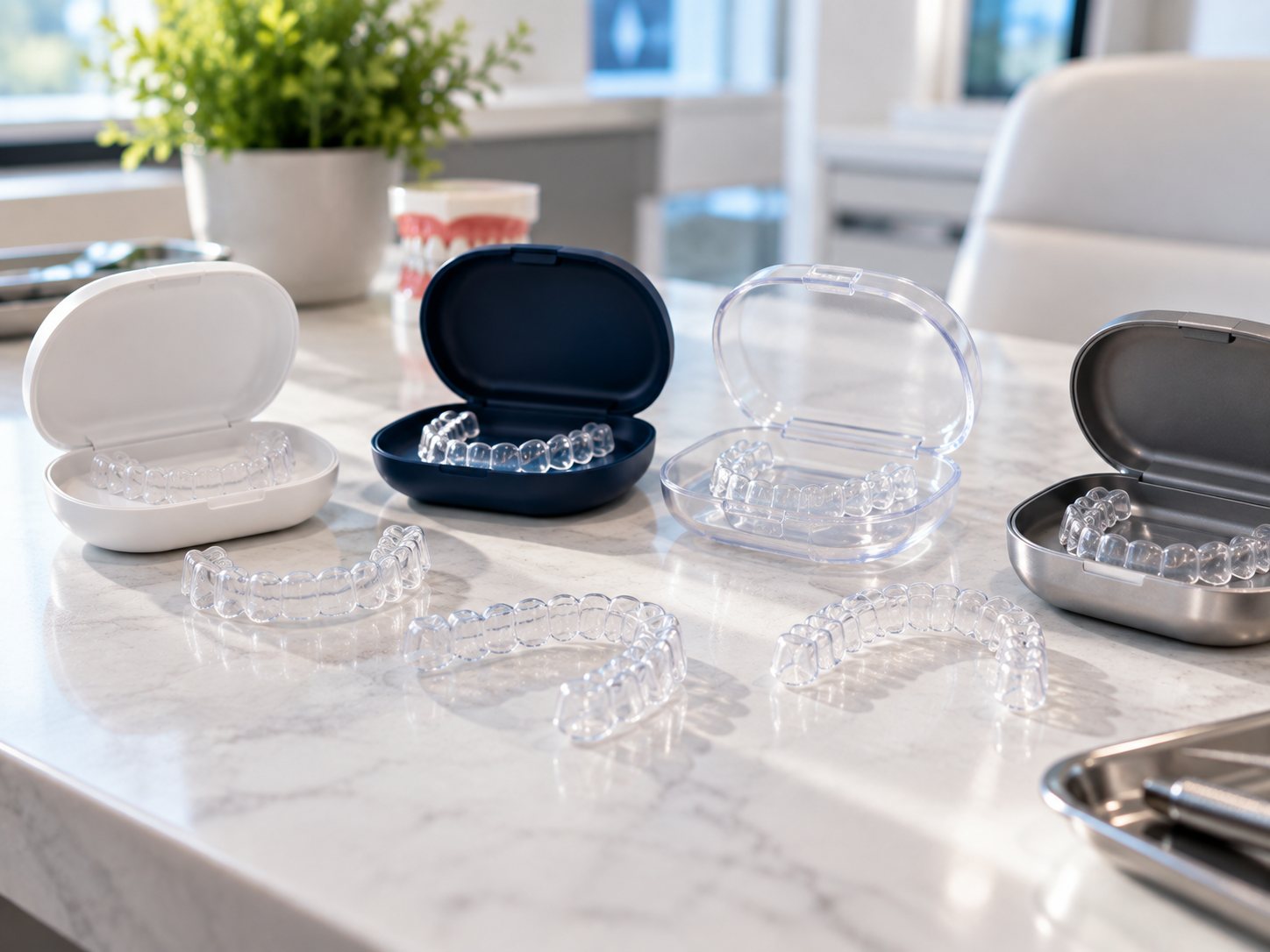
The comparison in plain language
Invisalign and Spark are both clear aligner systems. The useful distinction is how your clinician would use each system for your teeth, rather than which name appears on the case. Compare the proposed movements, visible attachments and follow-up arrangements alongside the product features.
The products and care options
Images identify the options shown. Product photos do not establish local availability or a comparison of treatment results.

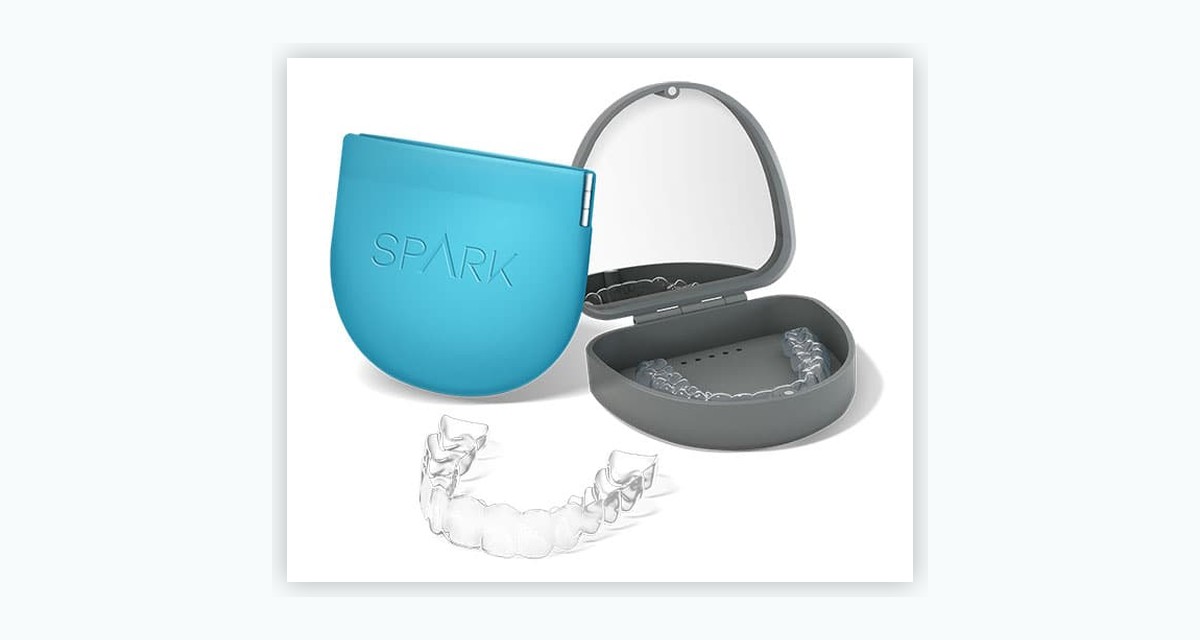
What each option describes
What patients usually compare
The software and material names below identify the systems. They are not a scorecard for comfort, speed or results.
| Compare | Invisalign | Spark |
|---|---|---|
| Planning environment | ClinCheck is the planning environment used for Invisalign. [1] | Spark uses Approver software. [3] |
| Material terminology | SmartTrack is the material name patients may hear. [2] | TruGEN and TruGEN XR are material names patients may hear. [3] |
| Your visible appliance | Ask to see the planned attachment positions and any elastic connections. | Ask the same question using the proposed Spark setup, rather than assuming fewer attachments. |
| Additional treatment | Request the rescan and additional-aligner policy for the quoted plan. | Request the same written policy, including any package limits or new fees. |
| Your total fee | Compare the clinician’s full quote, not an assumed Invisalign price. | Compare the same treatment goals and inclusions, not an assumed Spark discount. |
A material comparison is not an outcome comparison
Clarity and comfort need context
Product descriptions may discuss transparency, staining or material properties. Ask which comparison was made and whether it concerns a laboratory test, patient preference or a clinical outcome. Those are different questions. A material name alone cannot answer how noticeable your attachments will be.
Look at the bite as well as the front teeth
Ask the clinician to show the intended bite at the end of each proposed plan. Where treatment involves more than alignment, discuss how the back teeth and any elastic wear would be managed. A preview is a planning conversation, not a promise that every movement will occur exactly as displayed.
Define the review points
Ask when the clinician checks progress, what they check, and how they decide whether you should continue or have the plan revised. The question is not simply how many trays arrive in the first box. It is how the plan responds to your actual progress.
When either may be part of a reasonable plan
For a patient assessed as suitable for clear aligners, either system may be considered for alignment, spacing or relapse treatment. More involved bite goals need an explanation of the proposed mechanics and alternatives. Suitability is assessed for the individual—not assigned by the brand. [4]
Questions to ask before choosing
- Why would you choose this system for the movements in my plan?
- Can you show me the proposed attachments and any elastic connections?
- Which material would be used, and would that change during treatment?
- What is the agreed response if one tooth stops matching the plan?
- Are rescans, additional aligners and retainers included in this written quote?
A few points to clarify
Does a clearer-looking tray mean a better result?
Appearance is one preference. Ask separately about tooth movement, bite goals and monitoring. A claim about optical clarity does not, by itself, establish an advantage in your clinical result.
Can I switch from Invisalign to Spark during treatment?
Ask for an assessment before changing systems. New records, a new prescription or new fees may be needed; trays from different systems should not be assumed to be interchangeable.
Can I request either brand at the assessment?
You can ask about both. Listing Spark and Invisalign in this guide does not confirm that both are offered at the treating office. Availability and suitability need to be confirmed.
Choose the complete proposal
Choose between complete proposals: the intended finish, the appliance details you will live with, and the care included along the way. Ask the clinician to explain the reason for their recommendation.