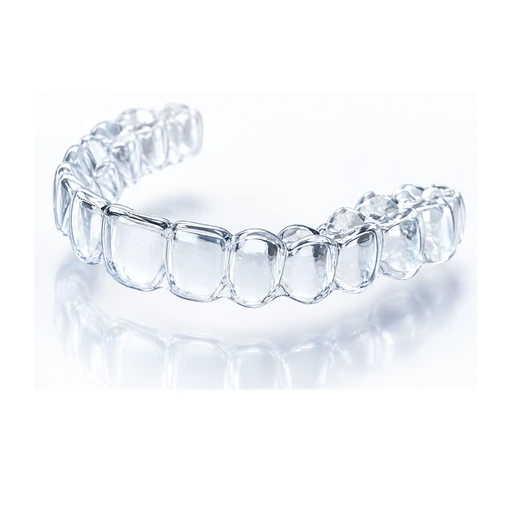
Invisalign refinements explained
Understand why additional aligners may be proposed, what the new goal is and how time, fees and retainers fit together.
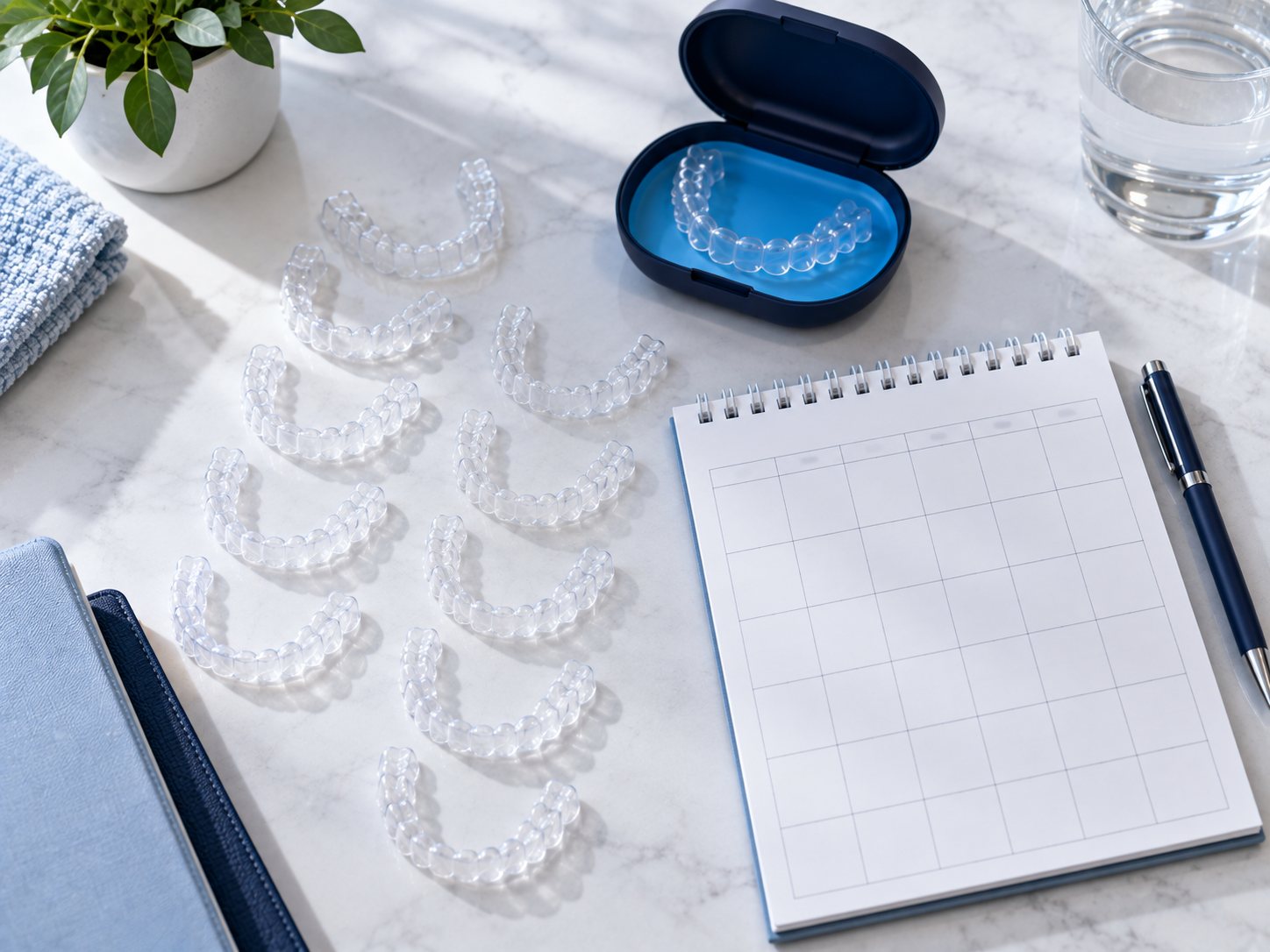
A refinement is additional active treatment.
A refinement uses further aligners after reassessment to address remaining movement goals. It may be considered for a tooth that did not follow the initial sequence or to improve a finishing detail. It is different from retention, whose purpose is maintaining positions. [1]
Additional trays do not by themselves prove that the original brand or clinician failed. They also should not be issued without a clear reason. Ask what remains to be corrected and how the next stage responds to it.
What the review should explain
Which tooth positions or bite contacts still need attention? Compare this with the original scope rather than assuming every possible cosmetic change was included.
Ask whether fit, actual tooth response, wear, an attachment or a changed goal is relevant. The new plan should respond to the finding, not simply repeat an unexplained sequence.
The clinician may need updated records or a scan to plan further movement. Confirm any changes to attachments, elastics or prescribed wear.
Ask about production time and active wear separately. Get specific instructions for what to wear while waiting; do not choose a holding tray yourself.
Clinical need and package allowance are not the same thing.
A manufacturer package may allow further aligner orders under particular conditions. The office agreement determines what professional care and related charges are included. Ask about both, including time limits and changed treatment goals.
Use the fee-comparison worksheet to record the answers. An allowance for additional trays is not a guarantee that every future treatment change will be included.
Finish by clinical assessment—not just by tray number.
Ask how the team decides active treatment is complete and how retainers are arranged. A final tray is a point in a sequence; the clinician’s assessment considers whether the agreed goals have been reached.
Keep the retention stage separate in the conversation: retainer type, prescribed wear, replacement arrangements and follow-up all deserve attention before active treatment ends. [2]
Questions families ask
Are refinements always needed?
Not in every case. Discuss the possibility when treatment is planned, then review the actual progress rather than assuming that everyone needs a fixed number of extra rounds.
Can I stop after the first series?
Discuss the result and the remaining goals with the clinician. The decision should also include retention; simply stopping wear is not a completion plan.
Can refinements change my finishing date?
Yes, further active treatment or fabrication time may affect it. Ask for a revised estimate and the instructions that apply while waiting, rather than relying on the first tray-count estimate.
Keep exploring
Sources & further reading
- Align Technology — treatment complexity and additional aligners — Manufacturer information.
- American Association of Orthodontists — retainers after orthodontic treatment — Professional-association guidance.
Sources checked 18 October 2026. Practical examples and checklists are editorial guidance. Product descriptions are not independent evidence of superiority.