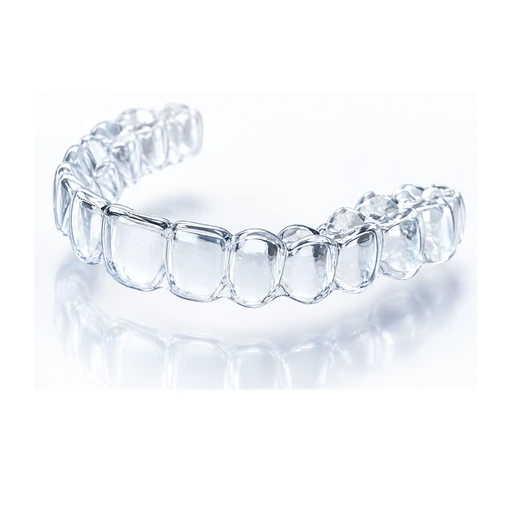
Invisalign attachments explained
What the small tooth-coloured shapes do, how they affect daily wear and when to contact the office.
Small shapes with a specific job
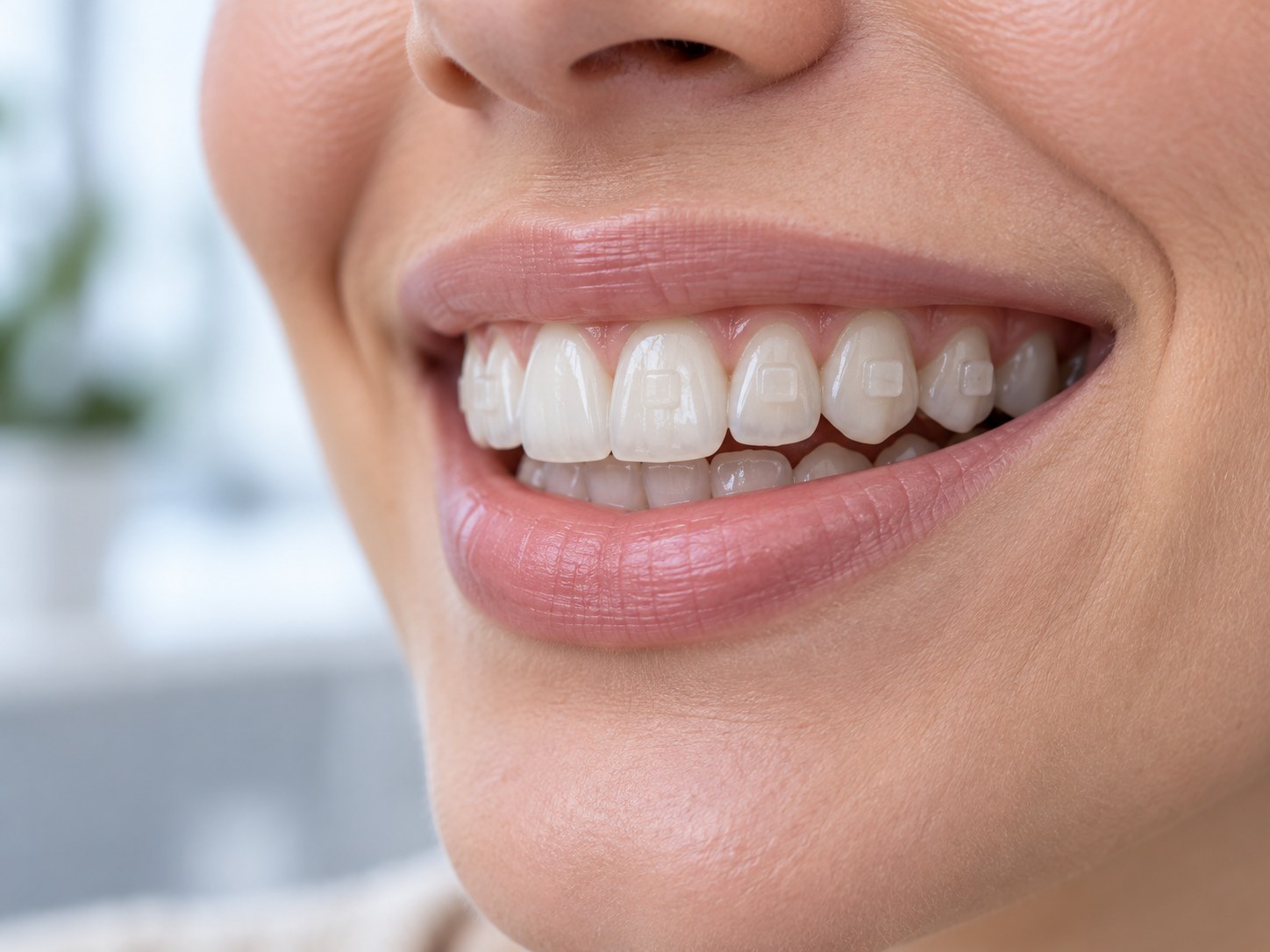
Attachments are bonded, tooth-coloured shapes that help an aligner engage a tooth. They act as additional contact surfaces so the tray can apply the intended force. Their size, position and purpose can differ across a treatment plan. [1]
They are not decorative, and the absence of attachments in an advertisement does not tell you whether your own treatment needs them. Ask to see the proposed positions before treatment starts.
What the placement appointment involves
The clinical team prepares the teeth, places composite material using a transfer template and hardens it with a curing light. The transfer template is removed, leaving the prescribed attachment shapes on the teeth. This is carried out by the clinical team—not an at-home task. [1]
Ask how long to allow for your appointment and practise tray removal before leaving. The important skill is taking the tray out as instructed without levering harshly against the attachment or using improvised tools.
What may feel different
The tray should fit around the planned attachment shapes. If it rocks or lifts, show the office rather than deciding that the attachment should be removed.
You may notice the shapes with your lips or tongue. Tell the team about persistent rubbing or a sharp area.
Tooth-coloured does not mean invisible. An attachment on a front tooth can be noticeable; ask about placement and expectations before starting.
If an attachment appears to have come off
Call the treating office and identify the tooth if you can. The team can decide whether it needs replacement and when. A missing attachment does not justify removing the others or independently advancing trays. [1]
A photo may be useful if the office requests one through its approved channel. Do not send detailed clinical information through a general website contact form.
Questions families ask
Do attachments stay after treatment?
The clinician plans their removal when no longer needed. Ask how attachment removal and retainer fitting are coordinated in your case. [1]
Can I choose treatment without them?
Ask why they are proposed and what would change without them. The answer depends on the movement goals rather than a universal preference for fewer attachments.
Are attachments the same as elastic buttons?
They can serve different purposes. Ask the team to identify any bonded feature in your plan and explain whether it engages the tray or helps connect an elastic.
Keep exploring
Sources & further reading
- Align Technology — Invisalign attachments — Manufacturer information.
Sources checked 18 October 2026. Practical examples and checklists are editorial guidance. Product descriptions are not independent evidence of superiority.