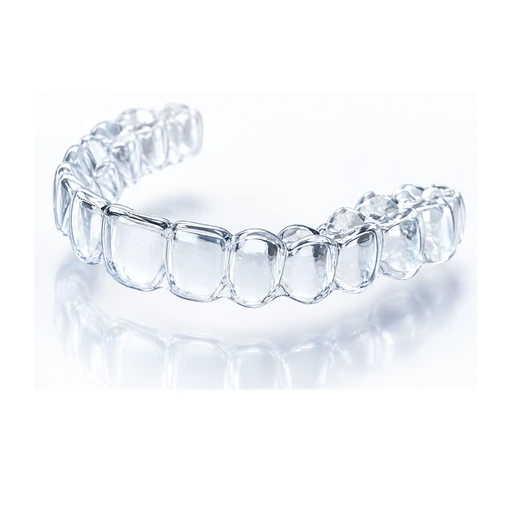
Removable clear retainers
These cover teeth in their retained position and come out for cleaning. Keep them in their case when not in use and follow the cleaning instructions for the material.
Keep the result part of the plan: retainer choices, daily habits, replacement arrangements and what to do when fit changes.
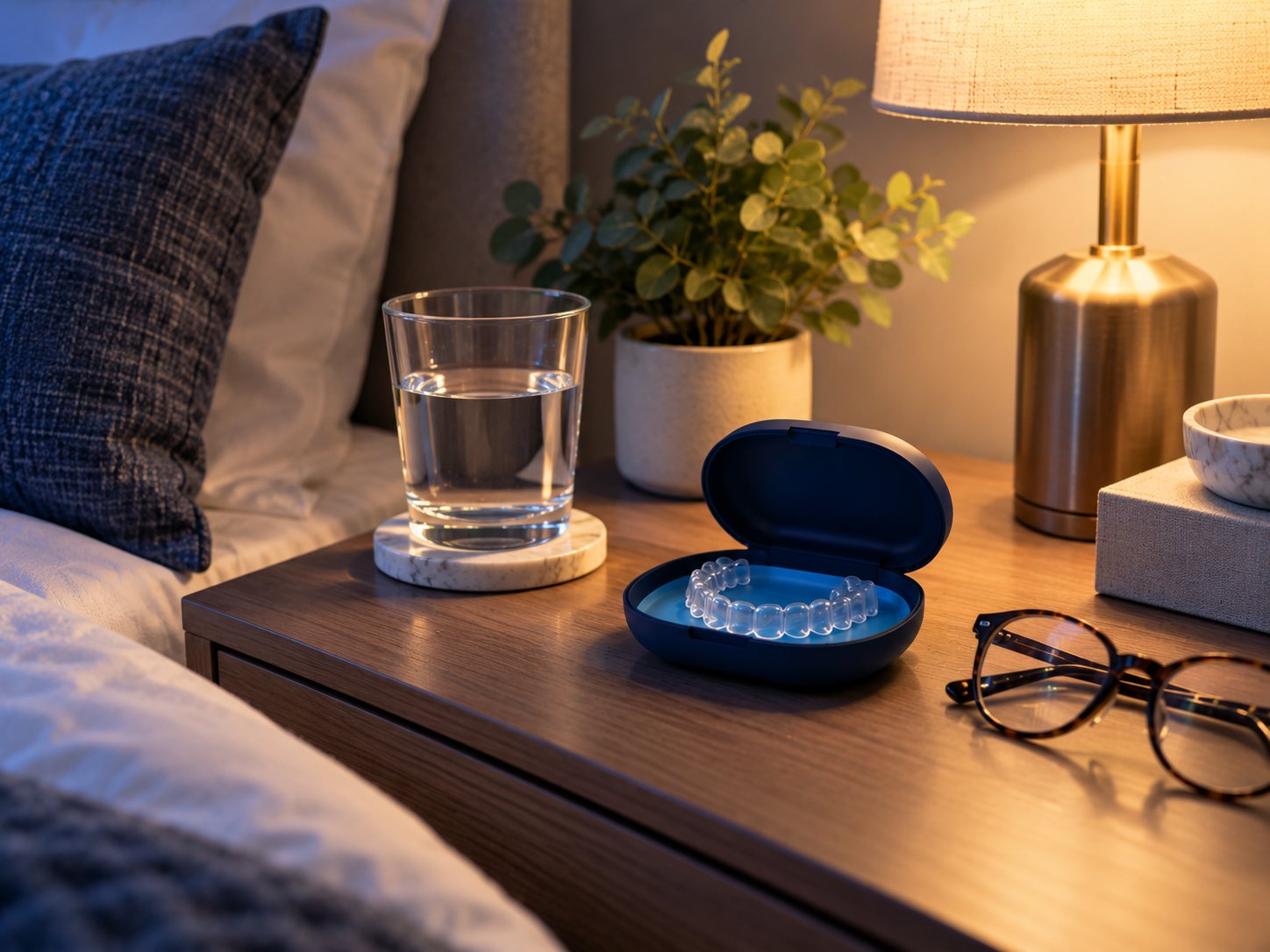
Teeth can continue to change position after orthodontic treatment. A retainer helps maintain the result; it is not simply another active aligner in the sequence. The wear plan is prescribed for the patient and may change over time. [1]
Before the last active tray is finished, ask when your retainers will be ready and exactly what to wear until then. Avoid an unplanned gap between active treatment and retention.
These cover teeth in their retained position and come out for cleaning. Keep them in their case when not in use and follow the cleaning instructions for the material.
A bonded wire requires cleaning around it and checks of the bonds. It is not a substitute for any additional removable retainer your clinician has prescribed.
A wire-and-acrylic design may be discussed in some plans. The choice should account for the result to be maintained, handling and maintenance—not appearance alone.
Ask the team to demonstrate how to insert, remove and clean the design you receive. [2]
Store the case somewhere predictable and away from pets or heat. Take it when you will be away overnight.
Keep the prescribed hours and any review date. Do not assume that the daily schedule for somebody else applies to you.
Know who to call if the retainer is lost, damaged or no longer fits. Ask about cost and how the teeth will be managed while a replacement is arranged.
Contact the treating office if fit changes or a bonded retainer seems loose. Do not force a retainer that will not seat or try to bend a wire into a new shape. Reassessment may be needed to understand whether the appliance, tooth position or both have changed. [2]
Orthodontic retention is generally a long-term commitment. Ask for your own wear and review plan rather than assuming a fixed end date. [1]
Do not assume so. Ask the clinician which appliance is intended for long-term retention and what to wear until it is supplied.
That depends on the agreement. Ask how many retainers are included, what replacements cost and which follow-up visits are covered.
Sources checked 18 October 2026. Practical examples and checklists are editorial guidance. Product descriptions are not independent evidence of superiority.