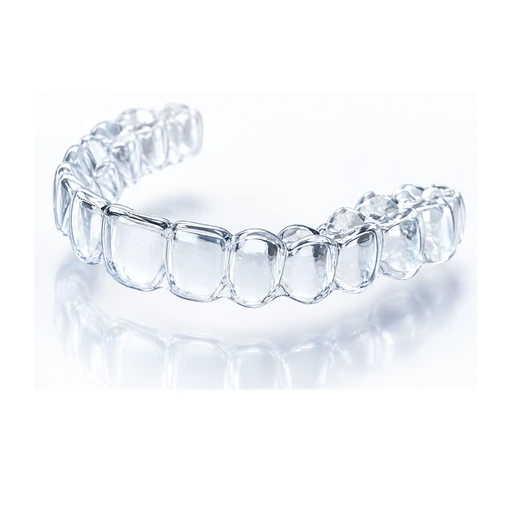
The finish
Which tooth and bite changes are included, and what are the limits? Ask to separate an ideal simulation from the agreed clinical goals.
Clear-aligner decisions for real adult lives: work, family, previous treatment and existing dental care.

You may be considering treatment for a crowded front tooth, spaces, shifting after braces or a bite concern. Name that goal first. Then ask the clinician what can be changed, what would remain and how dental health affects the options.
Adults can receive orthodontic care, but the plan needs to account for the condition of teeth and supporting tissues—not just age. Active dental or periodontal disease may need management before movement begins. [1][2]
Keep a case and care kit where you work. Think about coffee, grazing and meals away from home: each removal is part of the daily wear schedule, not an isolated exception.
Carry trays and the case in hand luggage or a daily bag. Before a trip, ask what to take and how to contact the office if there is a problem; do not improvise future tray changes.
Some people need an adjustment period for speech. Allow time to practise important presentations and discuss persistent difficulties with the team. [3]
Mention crowns, bridges, implants, veneers and planned restorative work. The treating clinicians may need to coordinate what happens first and how the final tooth positions will relate to the restoration. Avoid booking an irreversible cosmetic change around an assumed aligner finishing date.
These guides separate the questions: crowns, implant planning and veneers. The point is to plan the sequence together rather than arranging two independent treatments.
Bring an old retainer if you still have it. A change in tooth position may need reassessment; forcing an appliance that no longer fits is not a substitute for a new plan. Retainers and active aligners have different purposes. [4]
A limited correction may be an option in some cases, but “only one tooth looks different” does not describe the whole bite. Ask why a limited or comprehensive approach is being proposed, and how retention would be handled this time.
Which tooth and bite changes are included, and what are the limits? Ask to separate an ideal simulation from the agreed clinical goals.
Discuss wear, reviews and potential extra aligners. Consider these alongside work and family commitments rather than judging only the appliance’s appearance.
Ask what the written quote includes and what is charged separately. Check insurance directly for your own eligibility, including any adult limitations. [5]
Age alone does not answer the question. Dental health, supporting tissues, treatment goals and the ability to follow the plan need assessment. [1]
Ask which visits require you in the office and how long each is expected to take. Do not assume every review can be remote or that a particular appointment time is available.
Give the team the date, but do not treat it as a guaranteed completion deadline. Ask what can realistically be planned and what happens if further treatment is needed.
Sources checked 18 October 2026. Practical examples and checklists are editorial guidance. Product descriptions are not independent evidence of superiority.