Attachments
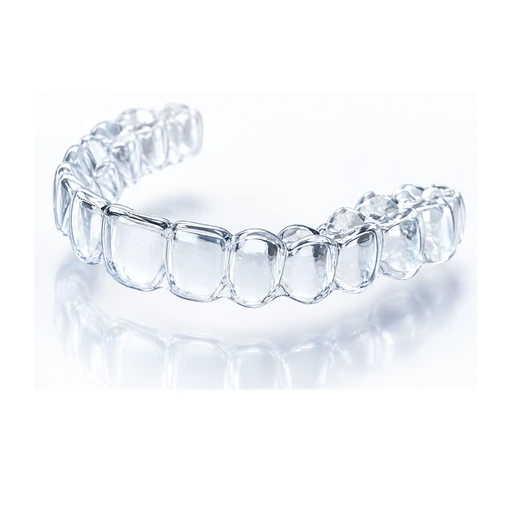
Small tooth-coloured features may give the tray a surface to engage. Their number and location depend on the movement plan. [2]
A practical introduction to removable orthodontic trays: what they do, what they ask of you and how to make sense of a proposed plan.
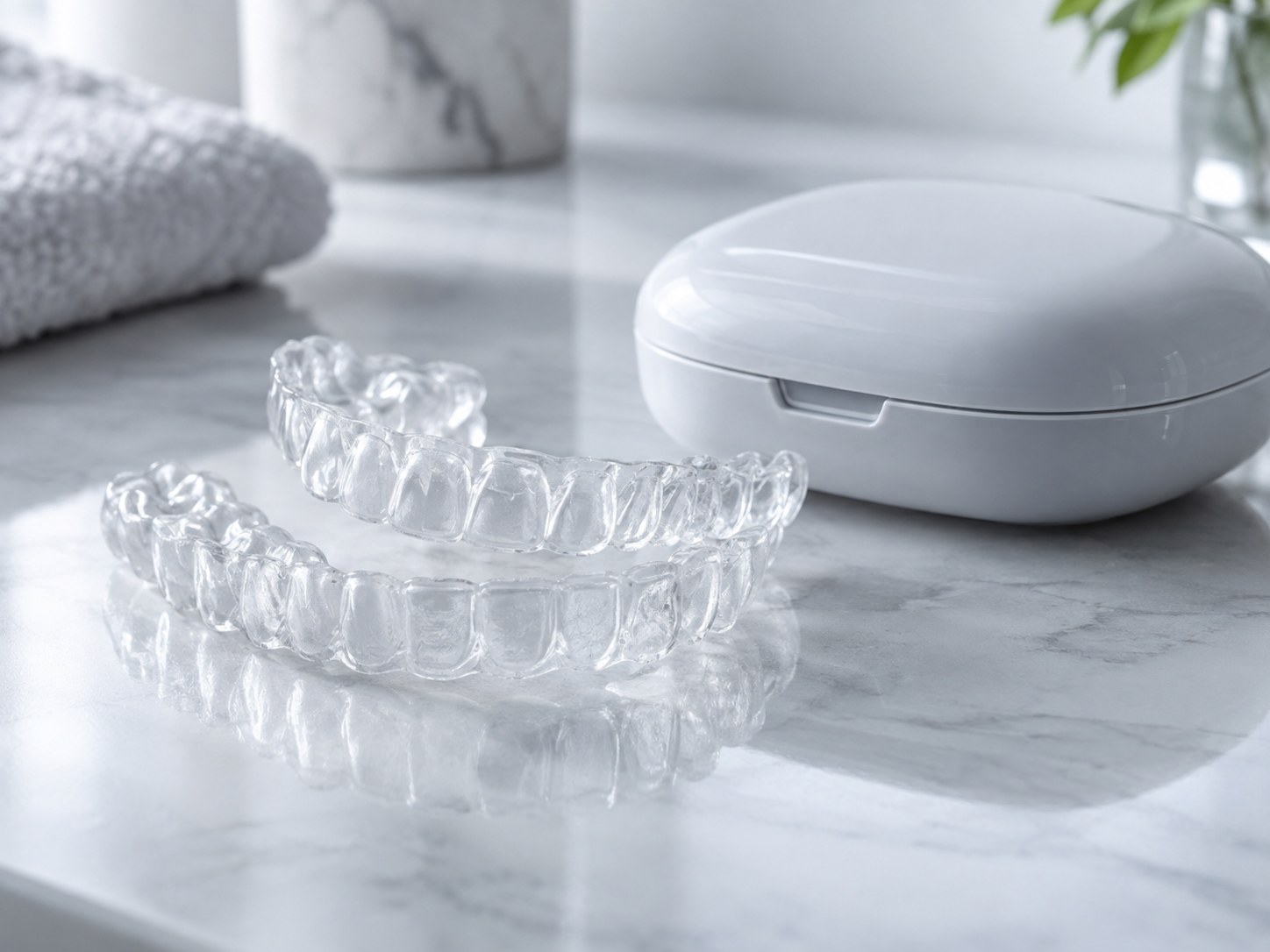
Each tray fits a planned stage rather than simply copying the teeth as they are today. A series applies pressure in small increments. The aim may include alignment, spacing or bite changes—not only the appearance of the front teeth. [1]
A clear retainer can look similar but has a different job: holding an established position. Buying a replacement retainer is not the same as beginning a prescribed sequence of aligners. Understand the distinction →
Arrange meals so that removing, cleaning and replacing trays becomes a predictable routine. Follow the office’s instructions for drinks and hygiene.
Use your prescribed daily wear time and change dates. A new tray on the calendar is not proof that the teeth are ready for it.
Bring the trays you are wearing. Describe any changes in fit, discomfort or your ability to wear them; these observations help the team decide what to check.
Small tooth-coloured features may give the tray a surface to engage. Their number and location depend on the movement plan. [2]
IPR, elastics or another appliance may be discussed when the teeth need more than straightening along a simple row. Ask what is proposed for your case.
Additional aligners may refine the result, while retainers support the new tooth positions afterward. These are different stages, not interchangeable products. [3][4]
Start by asking what the clinician intends to change and what would remain unchanged. Then compare daily wear, treatment visits, the response to poor fit, any additional-aligner allowance and the retainer plan. A reasonable proposal also explains the alternatives, including braces or postponing treatment.
You can use our brand directory without committing to a product. For a local consultation, confirm which systems are actually available rather than treating the directory as the practice’s service list.
Invisalign is one brand of clear aligners. The category also includes other branded systems and clinician-managed fabrication workflows. Our comparison pages distinguish products from care models.
No. You can start with your goals and practical constraints. Ask the treating clinician to explain the proposed appliance and any alternatives before agreeing to treatment.
Tray count alone does not describe the starting problem, planned movements or final assessment. Compare the proposed changes and follow-up rather than using the number of trays as a quality score.
Sources checked 18 October 2026. Practical examples and checklists are editorial guidance. Product descriptions are not independent evidence of superiority.