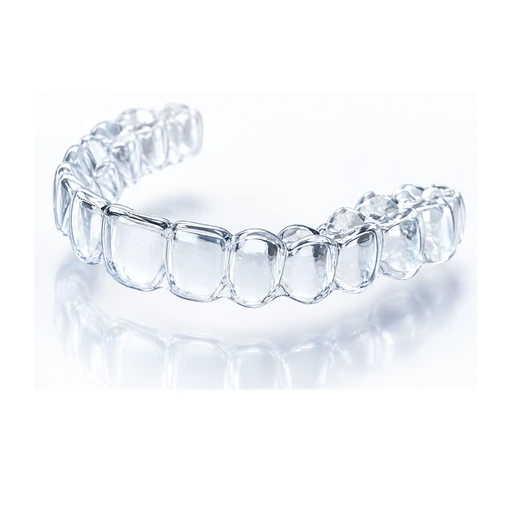
Invisalign for teens in Maple Ridge
School, meals, sports and growing independence: a family guide to making clear-aligner treatment workable.
A school-day routine that is realistic
The practical question is not whether a teen is “good at following rules.” It is whether they can remove, store, clean and reinsert trays reliably in the life they actually lead. Talk through an ordinary weekday together before treatment begins.
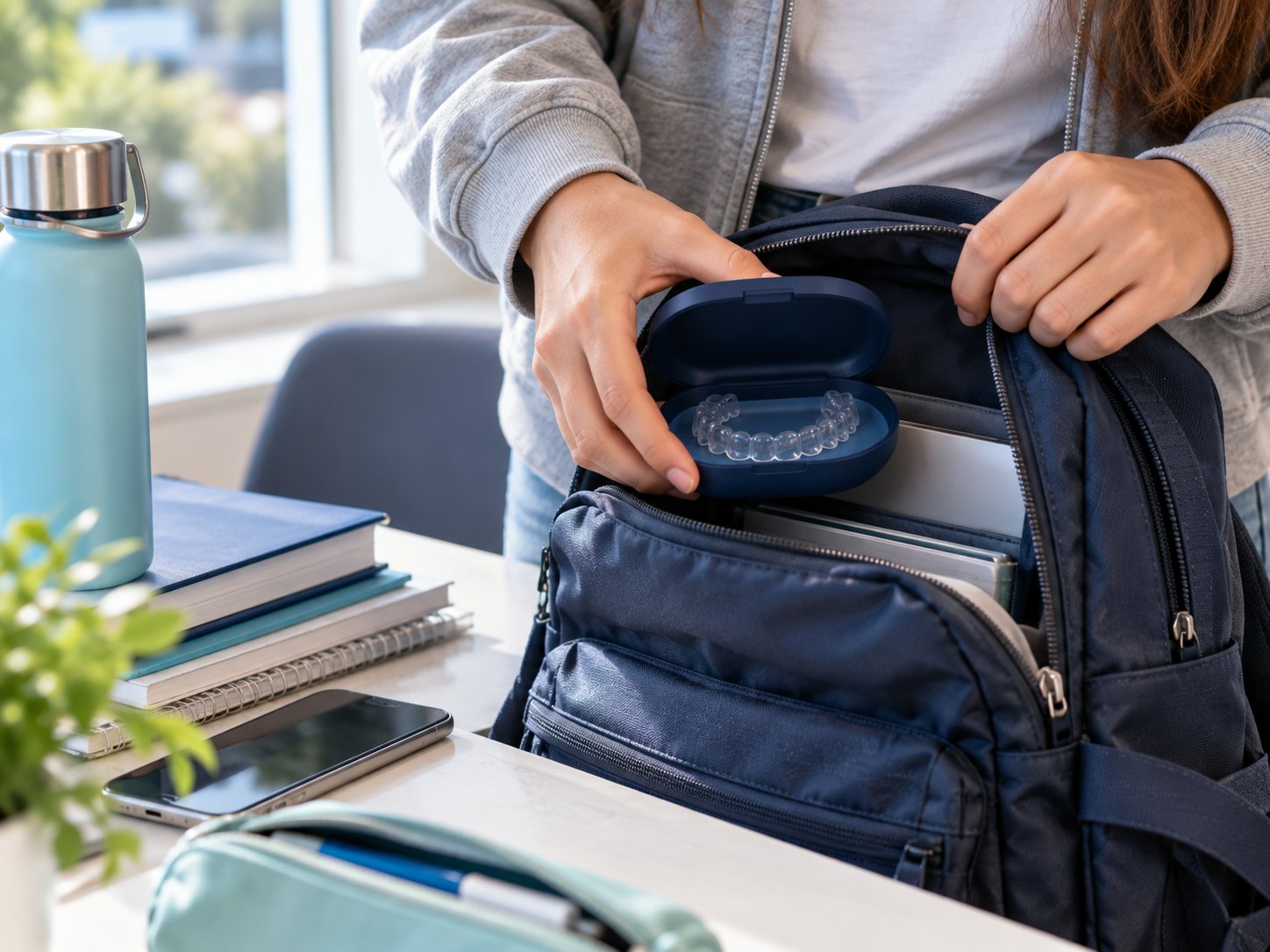
Finish breakfast and oral hygiene, insert the prescribed trays and pack the case. Keep the office’s contact details with the family’s appointment information.
Use the case—not a napkin or a pocket—when trays come out. Pack a small care kit and ask the team how to manage situations where normal brushing is temporarily unavailable. [1]
Make a specific plan for practice, a snack and returning trays to the mouth. A reminder can be helpful; a system that relies on remembering once tired is less dependable.
Check that the prescribed tray set is in place. Keep aligner changes tied to the clinician’s instructions, not a decision to “catch up” after missed wear.
Aligners are not sports protection.
Tell the team which sports your teen plays and whether a mouth guard is required. Arrange appropriate protection and instructions for removing and storing aligners during play; do not treat an aligner tray as a sports mouth guard. [2]
Music, speech and long rehearsals belong in the same conversation. Ask for a plan that accounts for the activity rather than allowing repeated, unplanned time without trays.
Give your teen a role—not just reminders.
Agree who carries the case, who keeps track of change dates and who contacts the office. Invite your teen to explain a problem directly at appointments; knowing how to ask for help is part of becoming independent.
If wear is consistently difficult, discuss it early. A different appliance or a different starting time may fit better. The goal is an achievable treatment routine, not blame.
When something is lost or feels different
Contact the treating office for a lost tray, a lifting edge or an attachment that seems to have detached. Tell them the tray number, when it happened and whether the previous set is available. Keep earlier trays if instructed, but do not independently choose a replacement sequence. [3]
Use the lost-aligner guide or poor-fit guide to organise the information for your call. Website enquiry forms are not the right route for urgent clinical concerns.
Make the care agreement clear for the whole family.
- Who is the treating clinician, and how are progress checks arranged?
- Which appointments need a parent or guardian present?
- What happens if a tray is lost at school or during travel?
- Are additional aligners and retainers included, and under what conditions?
For Maple Ridge and Pitt Meadows families, confirm appointment availability before planning school absences. Published office hours include administrative days and alternating appointments; they are not a guarantee of a particular after-school slot. [4]
Questions families ask
Can my teen simply wear trays after school and at night?
That is not a substitute for a prescribed full-time schedule. Discuss the daily wear requirement and activities with the treating clinician before starting. [5]
Are braces a failure if aligner wear is difficult?
No. Choosing an appliance that fits the patient and treatment goals is a practical clinical decision, not a judgement about the teen.
Can we decide after the consultation?
Use the visit to understand the recommendation, alternatives and written costs. Ask any remaining questions before agreeing to treatment; this guide does not set an office booking or cancellation policy.
Keep exploring
Sources & further reading
- Align Technology — aligner storage cases — Manufacturer information.
- myORTHODONTIST — sports mouth guards — Practice information.
- Align Technology — provider support and replacement aligners — Manufacturer information.
- myORTHODONTIST — Maple Ridge office, parking, appointment information and listed doctors — Practice information.
- American Association of Orthodontists — clear aligners — Professional-association guidance.
Sources checked 18 October 2026. Practical examples and checklists are editorial guidance. Product descriptions are not independent evidence of superiority.