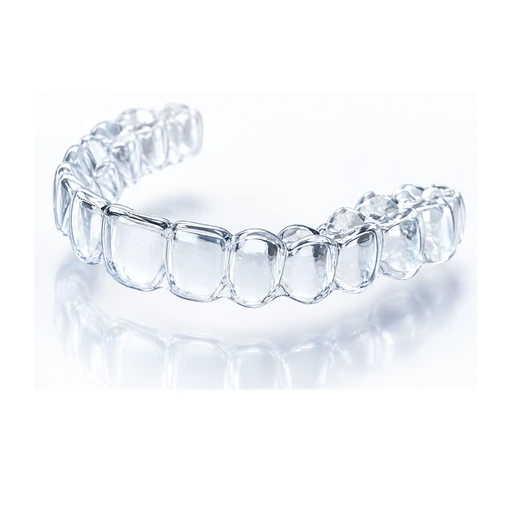
Clear Aligners for Deep Bite
Deep bite correction with aligners may involve bite ramps, attachments and careful vertical planning. Learn what patients should ask.
Quick answer
Clear Aligners for Deep Bite can sometimes be treated with Invisalign or other clear aligners, but the deciding factor is whether the needed tooth movements and bite correction are predictable with removable trays.
What matters for deep bite with clear aligners
Clear Aligners for Deep Bite is not just a question of whether trays can fit over the teeth. The plan has to identify the direction of movement, the available space, the bite relationship and whether attachments, IPR, elastics or staged movements are needed.
For Maple Ridge and Pitt Meadows patients, the honest question is whether aligners can control bite ramps, incisor intrusion/extrusion and retainer design predictably enough, or whether braces or a hybrid plan would be safer.
What to clarify
- Where the tooth movement must occur
- Whether space must be created or closed
- Whether the bite also needs correction
- How tracking will be checked between trays
- What retainer design protects the correction
Local assessment for clear aligners for deep bite
Condition-specific aligner planning needs records, not guesswork. For Maple Ridge and Pitt Meadows patients, a local assessment can show whether the visible concern is only cosmetic or part of a larger bite problem.
That distinction matters because some conditions respond well to trays, while others need elastics, bite ramps, IPR, refinements, braces or hybrid care.
Local planning checklist
- Ask whether the issue is tooth position, bite relationship or both.
- Review whether the movement is predictable with aligners.
- Clarify the role of attachments, IPR or elastics.
- Confirm how relapse risk will be managed.
Questions to ask about clear aligners for deep bite
- Is my deep bite mild, moderate or complex?
- Which teeth need to move most, and in what direction?
- Will attachments, IPR, elastics or bite ramps likely be required?
- What would make braces or hybrid treatment a better choice?
- How will the result be retained?
How to compare aligners, braces and hybrid treatment
For deep bite, the comparison should focus on movement control. Clear aligners may be excellent when the movements are staged well and the patient wears trays consistently. Braces may be stronger when rotations, vertical changes or bite control are the limiting factor.
The best plan is the one that can actually deliver the required movements and hold the result, not the one that looks most convenient on day one.
What the plan should document for deep bite
The plan should document the starting bite, the movement sequence, whether space is needed, whether auxiliaries are likely, how refinements are handled and what retainer design will be used.
That documentation matters because patients often see the trays but not the clinical logic behind them.
Related clear aligner guides
Common questions
Can Invisalign treat this problem?
Sometimes. The answer depends on the severity, root positions, bite, gum support and whether the required movements are predictable with trays.
Will I need attachments or elastics?
Possibly. Attachments and elastics are common tools for improving control and bite correction.
When are braces better?
Braces may be better when movements are complex, compliance is uncertain or bite correction is more predictable with fixed appliances.
Find out whether clear aligners fit your case.
Bring the questions from this guide to a specialist orthodontic assessment. The goal is not just to choose a tray brand; it is to choose the right treatment plan.